Antique American Indian Art, LLC
Matt Wood's                                              
ANTIQUE AMERICAN INDIAN ART, LLC
50 NE Midway Blvd
Oak Harbor, Washington 98277
(949) 813-7202 -
  [email protected]
  • Home
  • Art & Artifact Catalog
  • Maria Martinez Pottery Shop
  • Learn About the Art
    • General Glossary Terms
  • About Us
  • Free & Paid Appraisals
  • We Buy & Consign
  • Restoration Services
  • Trade Shows & Lectures
  • Contact
  • Legal - Shipping
  • Art & Artifact Catalog
  • >
  • Paintings - Photography - Prints
  • >
  • Southwestern Fine Art - Various Artist - Styles - Sand Paintings
  • >
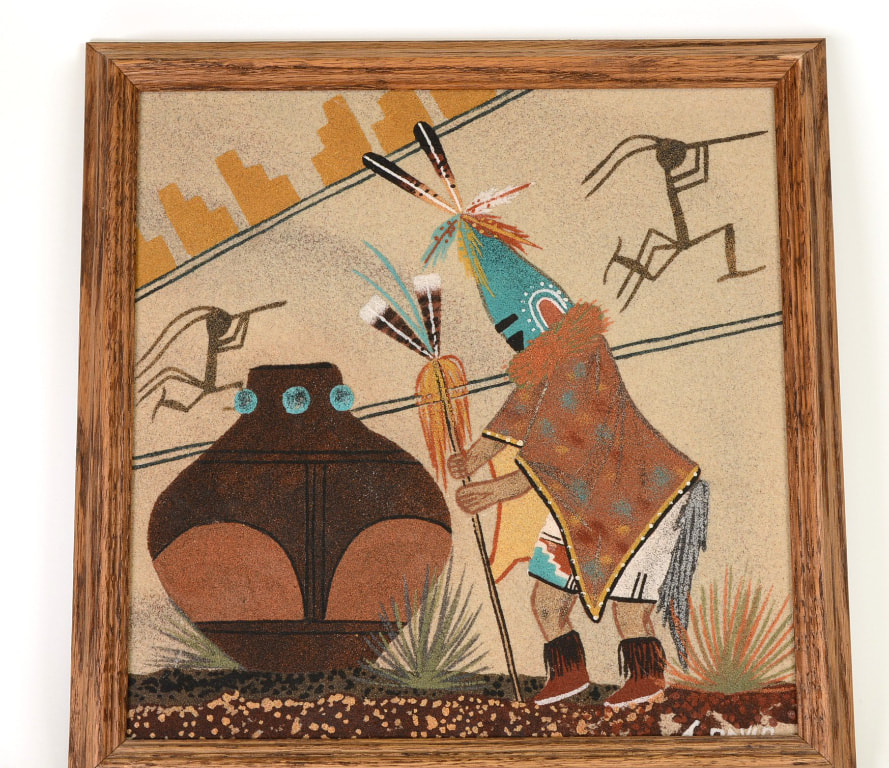
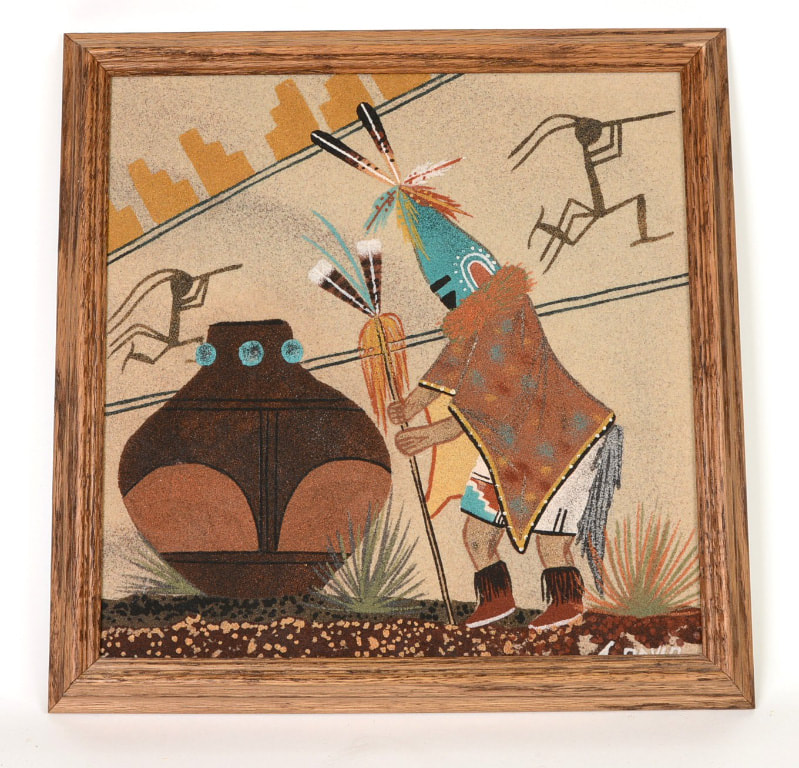
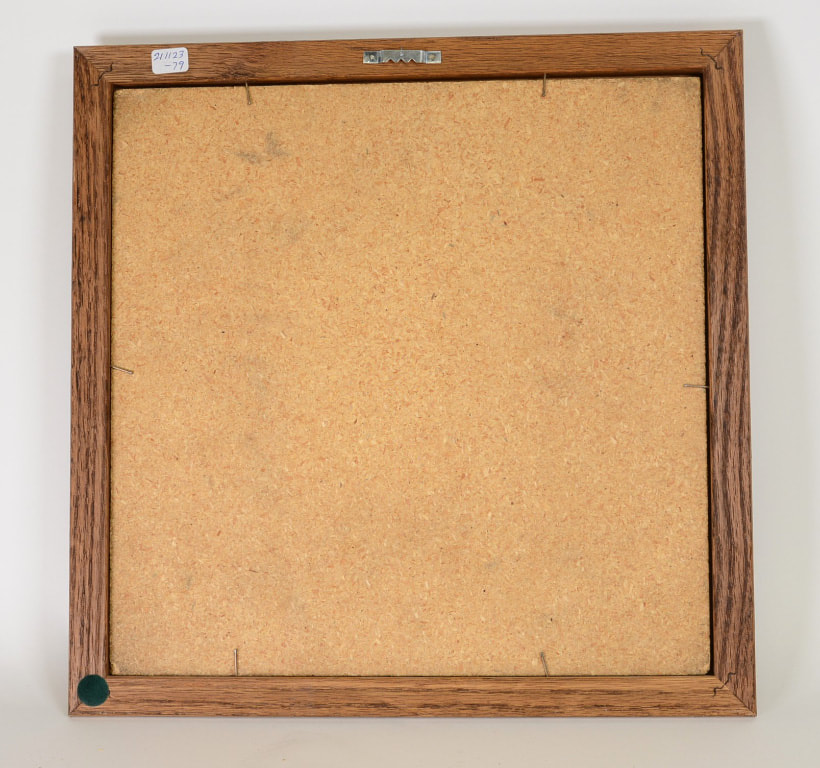
  • 211123-079 Fine Art: Sand Painting Aholi Kachina, Kokopelli and Pot with 3 turquoise by J. David

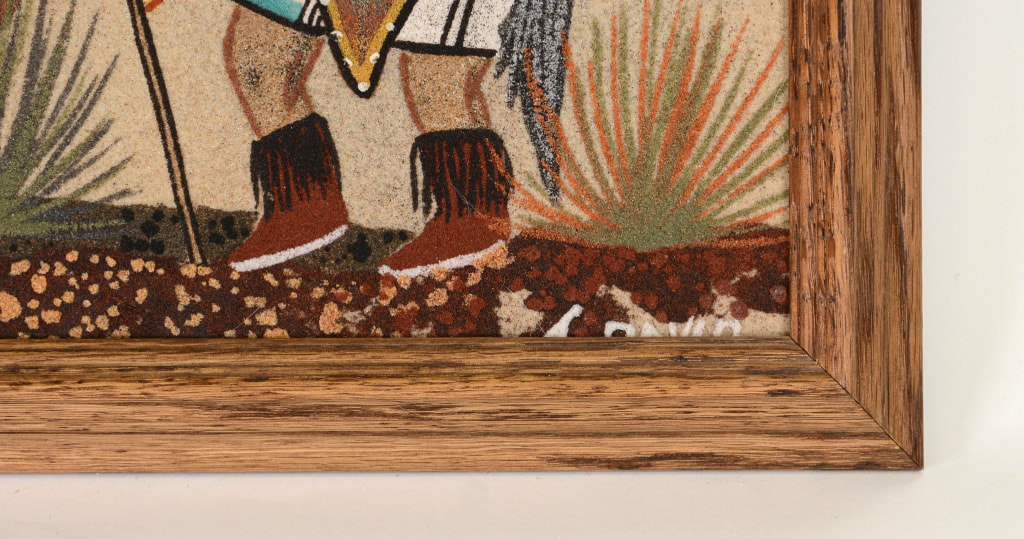
211123-079 Fine Art: Sand Painting Aholi Kachina, Kokopelli and Pot with 3 turquoise by J. David

SKU: 211123-079
$130.00
$130.00
Unavailable
per item

Late 20th Century

Size: 11 1/2" x 11 1/2"; framed 14" x 14"

Depicting Aholi Kachina


Aholi is the companion (Kachina Chief's Lieutenant) of Eototo during *Powamu and aids him in the task of bringing rain. While Eototo is present on all three mesas, Aholi visits only on Third Mesa. 

Aholi is a beautiful kachina in his multicolored cloak and tall blue helmet but is of less importance than the very plain Eototo. On the back of his cloak is a likeness of Muyingwa, one of the Germ Gods responsible for the germination of the seeds. Aholi wears a white kilt, a sash, and a fox skin. He wears red moccasins and carries a staff or wand.

Aholi carries a wand marked with a star on the end, and as the plumed water serpent, two jars dedicated to him are painted with pointed star emblems

Aholi is the patron saint (wuya) of the Pikyas or Young Corn Clan who care for the seed corn. The colors on his cloak are said to represent the flowers and brightness of summer.

Legend has it that the Aholi and Eototo kachinas were partners ages ago in a different land. Aholi stayed behind to fight a rear guard action, then had his throat cut to allow Eototo time to escape as leader. After many lengthy migrations throughout the Southwest, they were reunited at Old Oraibi. 

Aholi's name appears to derive from the Hopi word ahulti, or "return" which was the promise that the departing Quetzalcoatl made his people when he fled the Toltec capital of Tula for the mythical land of Tlillan

* The Powamu Ceremony is also called the Bean Planting Festival. It is observed in late January or early February and lasts 8 days.

  • Facebook
  • Twitter
  • Pinterest
  • Google+
1 available
Add to Cart

Always Selling - Buying & Consigning - Appraising - Restoring
 Fine Native American Art & Artifacts of the 19th and 20th Centuries

Disclaimer: Legal Requirement to differentiate:  items identified as NAVAJO on this website, meaning that it is to the best of our knowledge that the item was Probably Navajo, meaning that the  maker of the item, in our opinion,  was of the Navajo Tribe, and NOT that the item comes from The Trademarked  NAVAJO NATION. 

Prices subject to change due to typographical errors and product is subject to availability. Items without prices are typically available, and price and detailed information is on request. Please email us for details. Although the catalog is mostly current, some items may have been sold and not yet removed from site.
​
​Photos and information may be re-used with written permission only from Matt Wood's Antique American Indian Art, LLC.
Websites are free to link to this page or any pages on our site but may not copy and publish any photos or information on their sites without written authorization from Matt Wood's Antique American Indian Art, LLC.


Using any Appraisal or Contact Forms on this website places you on our EMAIL LIST automatically. If you don't want to be on the mailing list, unsubscribe on the first email you get from us and our system will take you off of the list. Our list is private, strictly used in-house for our newsletter emails, and is not shared or sold.

Legal - Shipping - Terms and Conditions


Copyright 2024 AAIA, LCC